Look at the top corners of almost any windshield and you will find a small marking: AS-1, with an arrow or a short line beside it. That mark is the boundary for windshield tinting in North Carolina. Film or a tint strip can be applied above the AS-1 line, and the glass below it has to stay clear. It is a small piece of print on the glass that decides a surprising amount about glare, heat, and passing inspection.
Manufacturers place the AS-1 line about five inches down from the top of the windshield on many vehicles, though the exact position varies by model. The marking exists so drivers, installers, and inspectors all share the same reference point without anyone measuring from the roofline with a tape.
What can go above the line
A tint strip, sometimes called a visor strip or eyebrow, sits in that top band. Its job is narrow and useful: it cuts the band of glare that hits your eyes when the sun is high or dropping, the same strip of sky your sun visors are meant to cover. Unlike visors, the strip is always there, never blocks the mirrors, and does not need flipping down at every turn.
The strip has to be non-reflective and stay above the AS-1 line. Below the line, North Carolina treats the windshield differently from the side windows: full-windshield film is only permitted in limited circumstances, generally tied to medical exceptions, rather than as a routine cosmetic choice. For most Charlotte drivers, the strip is the windshield option, and used well it is enough.

Why the seasons decide when it matters
In the Piedmont, the strip earns its keep twice a year. In summer, a high sun pours through the top of the windshield at midday stops, and the band of film takes the edge off that overhead glare. In late fall and winter, the problem flips: the sun rides low, morning and evening commutes point straight at it, and the top band catches light that would otherwise sit right at eye level above the visor's reach.
Spring and fall bring a third factor, inspection timing whenever your registration falls due. A strip that creeps below the AS-1 line, or a reflective film that was never allowed, is the kind of small thing that turns a routine inspection into a correction and a return trip. Checking the strip once a year, before your inspection month, takes a minute.
Before-the-season strip check
- Find the AS-1 marking at the top corner of the windshield and confirm the film edge stays above it
- Look for lifting or bubbling along the strip's lower edge, where heat and cleaning take their toll
- Check that the strip has not been extended or patched with a different, reflective film
- Wipe the strip with an ammonia-free cleaner and a soft cloth, never a paper towel or abrasive pad
- Note glare on your regular commute for a week after the time change, when sun angles shift
- Before inspection month, confirm no stickers or mounts have been placed over the strip area
Strips, visors, and sunglasses: what each does best
The factory sun visor blocks a big area but only when you deploy it, and it cuts into your field of view. Sunglasses handle glare everywhere but do nothing for the heat load coming through the glass, and they are easy to leave at home. The strip is passive and permanent, working on the overhead band every mile. Most drivers end up using the strip as the base layer and visors or sunglasses for the extremes.
There is also a heat argument in summer. The top of the windshield is where the dashboard meets the sun, and a strip reduces some of the direct load on the dash and the upper cabin. It will not do what full side-window film does for cabin temperature, but paired with legal side tint it rounds out the car's defenses during a Charlotte July.
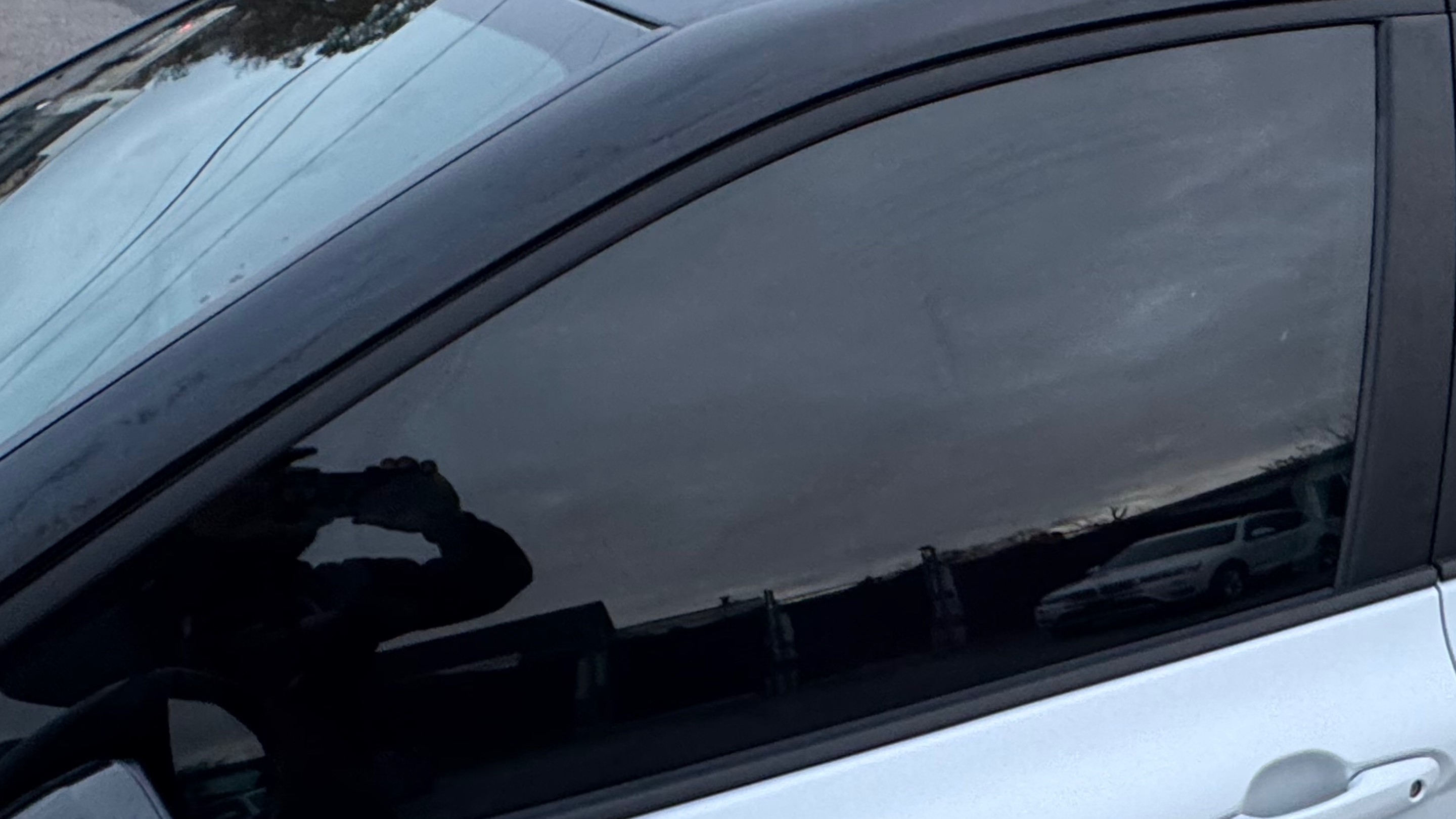
Getting a strip installed or corrected
Installing a strip is quick work for a tint shop, since it is a single straight panel. The more common job at shops like 704Tint, which lists windshield tinting among its services, is correction: removing a strip that was placed too low, replacing a faded or peeling one, or swapping a reflective film for a compliant one before inspection. Removal at the top of the windshield is gentler than rear-window work because there is no defroster grid in that band on most vehicles.
If your car has driver-assistance cameras or sensors mounted behind the top center of the windshield, mention them. The strip and the sensor housing share that real estate, and the installer will cut around the housing so nothing interferes with the camera's view of the road.
Common questions
Where exactly is the AS-1 line on my windshield?
It is printed on the glass itself, usually near the top corner, marked AS-1 with an arrow or line. The film must stay above that mark, roughly the top five inches on many cars.
Can I tint my whole windshield in North Carolina?
Generally no, not as a routine choice. North Carolina limits windshield tint to the strip above the AS-1 line, with full coverage tied to medical exceptions.
Does a tint strip affect my inspection?
Only if it is placed below the AS-1 line or is reflective. A compliant strip in the top band is a normal, passable part of the car.
Photos in this guide are representative stock images.
← All guides from 704Tint← Back to 704Tint