Most cars leave the factory with privacy glass on the rear windows and nothing on the fronts. That tinted look in back is dyed glass, not film, and it is usually darker than what North Carolina allows on front side windows. So the question at 704Tint in Charlotte is rarely how dark everything can go. It is how to make the front windows sit comfortably with the rear glass, legally and visually, without a mismatched two-tone look.
The front side windows are where the legal limit lives. In North Carolina, front side windows must let in more than 35 percent of visible light, a figure called VLT, and that number is measured on the glass and film combined. Factory glass already blocks a little light on its own, so the film chosen for the fronts has to account for that to land on the right side of the limit at inspection.
Why the fronts decide everything
Rear windows on SUVs, trucks, and vans have far more latitude under North Carolina rules, and factory privacy glass takes advantage of it. Front windows do not. That single fact shapes the whole job: the rears can stay as they are or go darker, while the fronts must be built around the 35 percent combined figure. A good match starts by measuring what the vehicle already has, front and rear, before any film is cut.
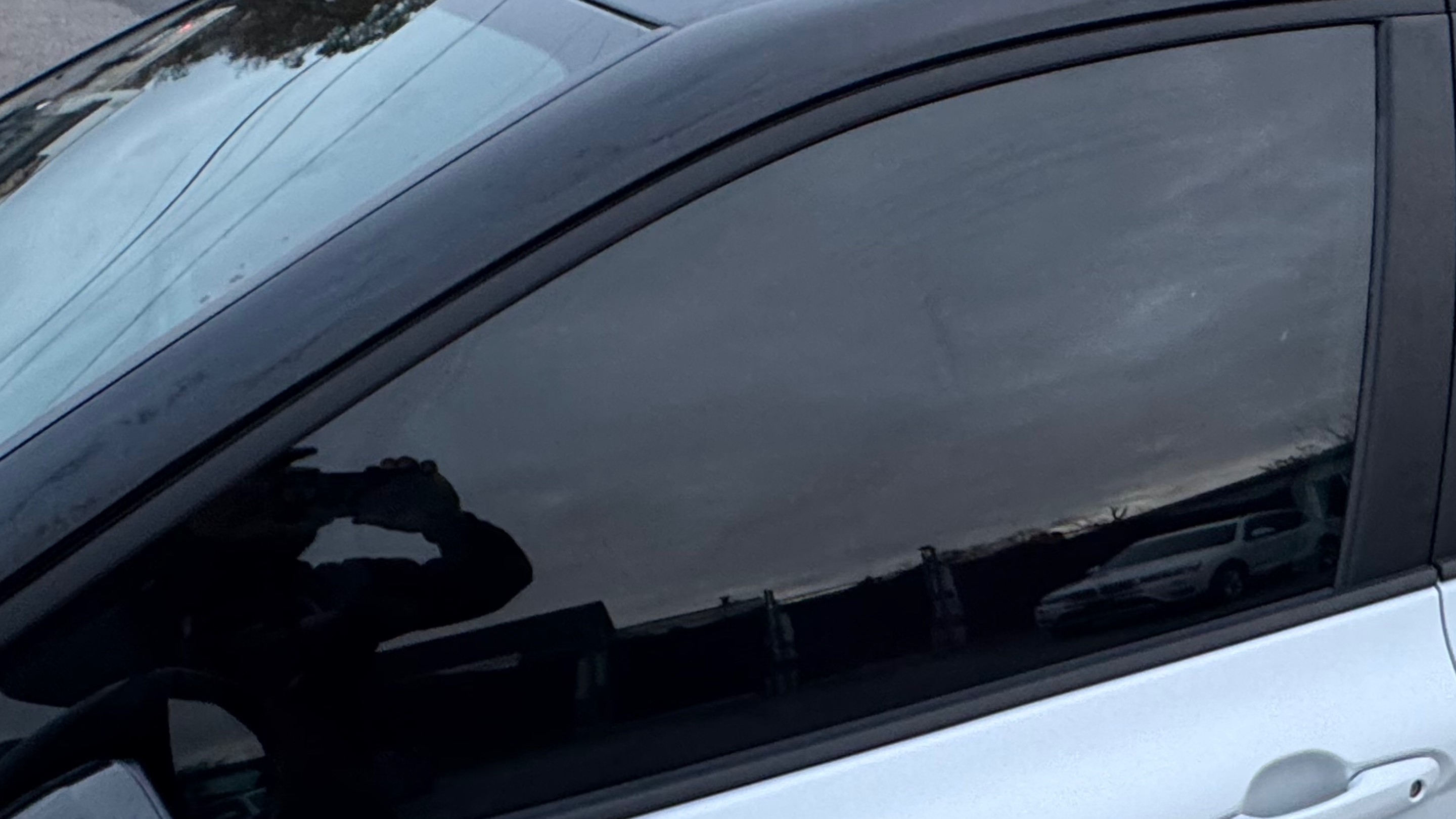
Visual balance is about more than darkness. Film and dyed glass can share a shade number and still look different, because dyed privacy glass often has a warm or green cast while films run neutral or slightly cool. Under Charlotte's bright summer sun the mismatch shows most; on an overcast day it nearly disappears. Judging the match outdoors, in daylight, is the only honest test.
A year of tint decisions
Tint work has a calendar, even if most drivers only think about it once. Spring pollen, summer heat, fall inspection timing, and winter glare each change what matters. This planner follows a Charlotte year for a car that already has factory privacy glass in back and bare fronts.
| Season | What to check or do | Why it matters |
|---|---|---|
| Spring | Judge the front-to-rear match in bright daylight; rinse pollen off film gently | Pollen season coats everything; clear viewing shows true color balance |
| Early summer | Add or refresh front film before peak heat | Cabin heat and glare climb fast; new film needs curing time before hard use |
| Mid-summer | Avoid rolling fresh front windows down during cure | Film bonds over several days; early window use can lift edges |
| Fall | Confirm combined front VLT before annual inspection | Inspection measures the front windows; knowing the number avoids surprises |
| Winter | Note low-sun glare on morning and evening drives | Low sun angles expose weak glare control on untinted fronts |
Reading the year like a maintenance plan
The spring row is really about honesty. Pollen dust softens contrast and hides a color mismatch, so a rinse and a look in full sun tells you whether the fronts and rears actually agree. If they do not, early summer is the time to act, because film installed before the worst heat cures in warm conditions and is working for you through the whole season rather than arriving in August.
Fall is the compliance checkpoint. North Carolina's annual safety inspection includes a tint check on the front windows for vehicles where tint is measured, and an aftermarket film that pushes the combined reading past the limit is a fail that has to be corrected. Keeping the paperwork from your install, which lists the film used, makes that conversation simple.
Getting the balance right the first time
Three habits separate a matched job from a mismatched one. First, measure the factory glass before choosing film, since the limit applies to the combination. Second, compare film samples on the actual glass outdoors, not under shop lights. Third, accept a small shade step between front and rear if the factory glass is very dark; a slight, even gradient reads as intentional, while forcing an exact match can push the fronts past the legal line.
Windshield tinting, headlight and taillight tinting, and detailing all interact with the same goal of a car that looks finished rather than patched together. The fronts will always be the legal limit's whole story. Build around them, check the result across the seasons, and the balance holds.
Common questions
Why do my rear windows look darker than my fronts?
The rear glass is usually factory privacy glass, dyed in the glass itself and darker than the 35 percent VLT limit that applies to front side windows in North Carolina.
Can front film exactly match factory rear glass?
Often it can come close, but not always. If the rear glass is very dark, matching it exactly could push the fronts past the legal limit, so a slight step is the safer result.
Does the inspection really measure tint?
Yes. North Carolina inspections check front window tint with a light meter, and the reading covers the glass and film combined, not the film alone.
Photos in this guide are representative stock images.
← All guides from 704Tint← Back to 704Tint